


 Preventive Health
 Contact Us
 Career
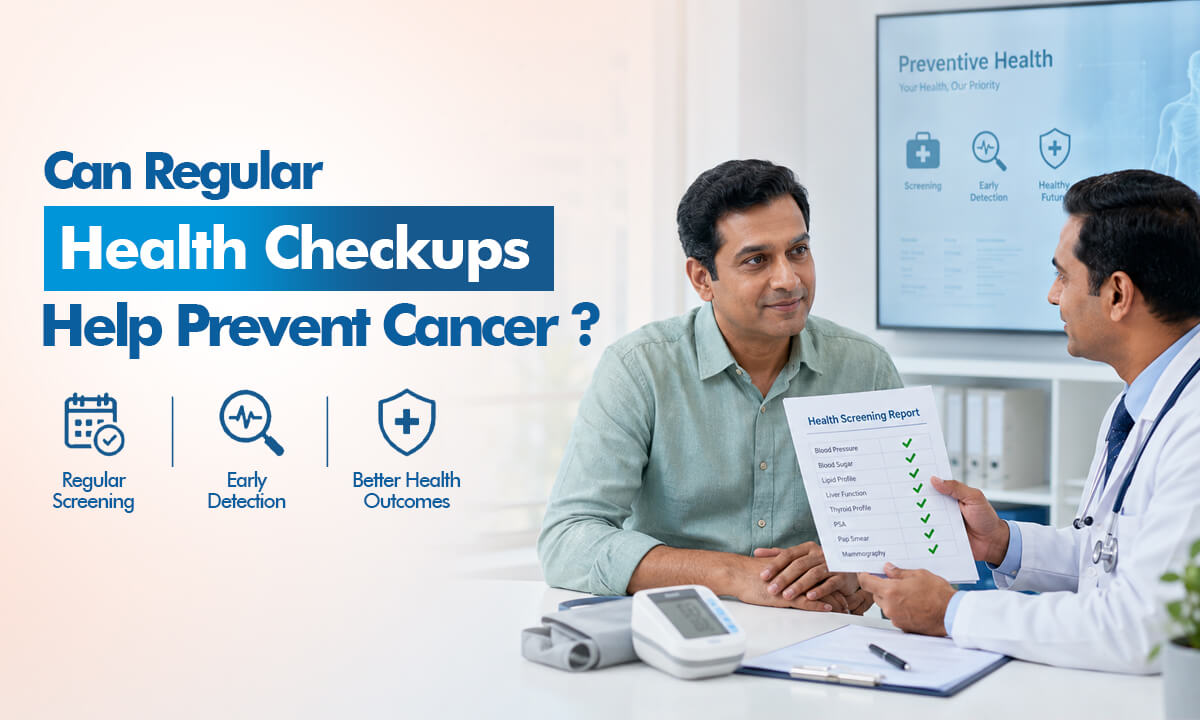
Can Regular Health Checkups Help Prevent Cancer?
Cancer is a deadly disease that has become one of the reasons that affects people globally on a yearly basis.
Even though there have been considerable advances in science, cancer is one of the diseases that has constantly been on the rise, hence requiring more research to be conducted on it for better treatment options.
However, the fact to notice here is that prevention through early detection can help save lives.
Many kinds of cancer begin developing in a person without exhibiting any symptoms until they become severe. At such a time, treatment of the disease becomes challenging. It is therefore important to undertake regular health checkups, which help in the identification of cancer and other illnesses at the early stages even if the patient does not exhibit any symptoms.
Many people choose not to undergo preventive health checkups as they do not feel sick. They also do not consider themselves as people likely to be suffering from cancer in their lifetime due to age and lack of family history.
Action Cancer Hospital sees the need to offer its patients preventive healthcare services since they can help in the early detection of any cancer and other diseases before they become serious.
Why Early Detection Matters
The disease is caused by abnormal cell division. It takes a lot of time for the disease to develop and mostly, its symptoms can hardly be identified when the disease starts developing.
In case the cancer is diagnosed early, then treatment will be:
- Less complicated
- Highly successful
- Cost-effective
- Linked to better chances of survival
- Requires less intensive treatments
However, if the cancer is discovered in its late stages, then it could spread to the surrounding tissues and even other parts of the body, making it hard to manage.
Regular check-ups assist people in determining risk factors for diseases.
Can Health Checkups Actually Prevent Cancer?
This is among the most frequently asked questions.
The answer is—yes; but indirectly.
Checkups cannot prevent cancer on their own. Nonetheless, checkups have the capacity to detect problems that may, ultimately, cause cancer when untreated.
Examples of what can be detected through regular screenings include:
1. Precancerous polyps of the colon
2. Cervical cells that show abnormal growth
3. Mouth ulcers
4. Breast problems
5. Cancer-associated infections
6. Other lifestyle-associated issues
If these health problems are detected early and treated accordingly, it is possible to stop them from becoming cancerous.
Furthermore, checkups will help an individual to make better decisions in terms of lifestyle as a result of monitoring aspects such as body weight, blood pressure, blood sugar, and other health-related indicators.
Who Should Get Regular Cancer Screenings?
Many think that cancer screening is meant for the elderly alone. Age is just one aspect. There are other considerations to be made when recommending cancer screening.
Screening tests could be recommended for you if you:
1. Have exceeded 40 years of age
2. Are a cancer patient in your family history
3. Are a smoker and consumer of tobacco products
4. Drink alcohol frequently
5. Are overweight or obese
6. Are physically inactive
7. Have any of the following chronic infections: Hepatitis and Human Papillomavirus
8. Were once a victim of precancerous diseases
Younger individuals should also pay close attention to their regular medical visits especially if they have risk factors.
Common Cancer Screening Tests
Different cancers require different tests for detection. The right screening test will be recommended by your doctor considering your age, gender, medical history, and risk factors.
Breast Cancer Screening
Breast cancer is the most common form of cancer amongst women.
Tests used can be:
1. Clinical breast exam
2. Mammogram
3. Breast ultrasound when necessary
4. MRI scan for select individuals who are at risk of the disease
Females should be aware of what their breasts normally look and feel like.
Cervical Cancer Screening
Among cancers, cervical cancer is considered among the most preventable cancers due to screening.
Some methods used include:
1. Pap smear test
2. Human papillomavirus (HPV) test
These tests help detect any pre-cancerous cervical cells and hence enable early treatment.
Colorectal Cancer Screening
Colon and rectum cancers typically arise from benign polyps which then transform into cancer.
The available screenings are:
1. Colonoscopy
2. Tests using stool samples
3. Flexible sigmoidoscopy for selected patients
Polyp excision using colonoscopy is highly effective in reducing the risk of developing colon cancer.
Oral Cancer Screening
Oral cancer is most common in India because of smoking habits and smokeless tobacco usage.
The oral examination helps in the detection of:
1. White patches
2. Red patches
3. Non-healing ulcers
4. Abnormal growth
Early detection helps in better treatment results.
Prostate Cancer Screening
Men, especially those above 50 years or having a history of it within their family, may seek advice from their doctors regarding the screening for prostate cancer.
This could include:
1. Prostate-specific antigen (PSA) test (blood)
2. Digital rectal examination
Every man does not need to undergo regular PSA tests.
Lung Cancer Screening
Patients who have had years of heavy smoking can be screened through low-dose CT scans that can detect lung cancer before the appearance of any symptoms.
The doctor will decide if you qualify for screening.
Signs You Should Never Ignore
Although it is essential to get regular health checkups, there are some symptoms that need medical care immediately.
The following are the symptoms you need to see your doctor for:
1. Weight loss without apparent cause
2. Cough that persists for a number of weeks
3. Blood in your urine or feces
4. Problems with swallowing
5. Alteration of bowel movements
6. A swelling anywhere in the body
7. Exhaustion
8. Unusual bleeding
9. Ulcers that will not heal
10. Changes in mole or skin sores
It should be noted that such symptoms are not always related to cancer.
Lifestyle Habits That Reduce Cancer Risk
Health examinations for cancer prevention are just a portion of the efforts that can be made to prevent cancer. Daily good practices also contribute to cancer prevention to a great extent.
Recommendations include:
1. Eating a balanced diet with lots of fruits and vegetables
2. Having a normal body mass
3. Performing physical exercises
4. Avoiding smoking and other types of tobacco use
5. Minimising alcohol intake
6. Protect your skin from overexposure to the sun
7. Receiving vaccinations, including HPV and hepatitis B
8. Controlling stress and getting enough sleep
Small regular changes have more effect on one’s health than temporary dietary fads.
The Importance of Knowing Your Family History
The following cancers could be linked to family history:
1. Breast cancer
2. Ovarian cancer
3. Colon cancer
4. Prostate cancer
In case any of your close family members had cancer, your physician may advise you on early or more regular screening tests.
It is essential to keep track of your family medical history for the doctors to tailor their approach to your needs.
Why Many People Skip Health Checkups
Even with growing awareness, individuals are still putting off screening.
Common reasons include:
1. "I feel perfectly fine."
2. Fear of hearing bad news.
3. No time.
4. Cancer always produces symptoms.
5. It can never happen to me.
Regrettably, only when symptoms manifest do people wait for the diagnosis to come their way.
Preventive health checks help detect potential issues before the symptoms become evident.
Are Cancer Screenings Safe?
Yes. Most screening tests are safe, fast, and done by health care practitioners who are trained.
Some screening tests may cause discomfort to the patient, while some just need a blood test or an imaging test.
The advantages of early cancer detection far outweigh the minimal risks of taking up a screening test.
Your doctor will tell you:
1. The reason why the test is being recommended
2. The advantages of the test
3. What risks there may be with the test
4. When the test should be repeated
The Role of Personalised Screening
Everyone does not necessarily require the same screening protocol.
The following are some of the determinants that the doctor will consider before advising on investigations:
1. Age
2. Gender
3. Personal medical history
4. Family history
5. Lifestyle choices
6. Present diseases
7. Occupational hazards
A personalised screening protocol helps avoid unnecessary investigations while taking care to ensure that no essential medical problem is missed.
In Action Cancer Hospital, it is recommended that people consult their doctor and have investigations done depending on their own particular medical condition.
When Should You Schedule a Health Checkup?
If you are completely healthy, but:
1. You are over 40 years old
2. There is cancer in your family
3. You smoke or use tobacco products
4. You have unexplained symptoms
5. It is over a year since your last medical checkup
6. You need screening as recommended by your physician
Think about getting your checkup done. It will be better to prevent a disease than treat it later on.
Final Thoughts
Although frequent health screenings do not ensure the prevention of cancer, they represent one of the best ways of diagnosing and preventing the disease. Indeed, there are many types of cancer that can be diagnosed prior to the appearance of any symptoms. Moreover, there are some precancerous conditions that can be treated to prevent cancer from developing into a deadly disease.
A blend of medical screening, good lifestyle choices, and knowledge on risk factors may significantly increase chances of survival.
At Action Cancer Hospital, it is known that prevention is one of the most significant pillars in the management of cancer. It is provided through timely consultations, proper screenings, and patient education.
If you are putting off your yearly health screening, make sure that you give this issue priority. A single screening could give you peace of mind and even save your life.
