


 Preventive Health

 Contact Us
 Career

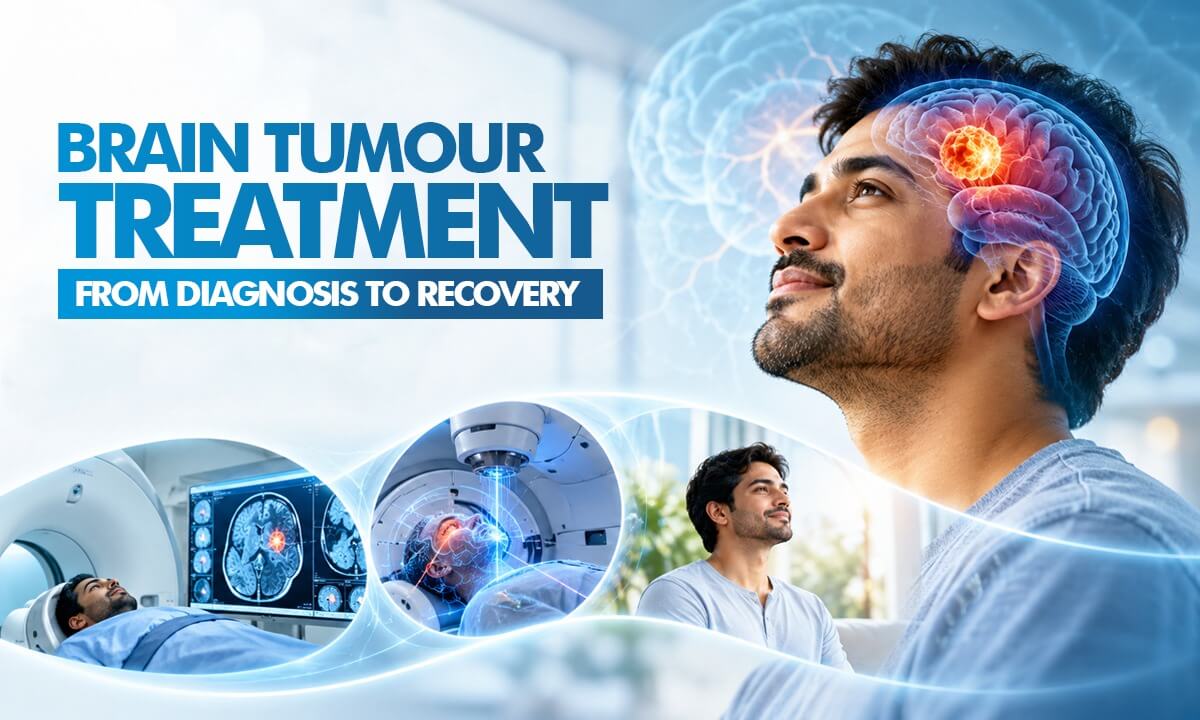
Brain Tumour Treatment in Delhi: Diagnosis, Surgery and Advanced Treatment Options
It is natural that a patient or their family members get very concerned at the news of brain tumour. The questions of whether the tumour is cancerous, what treatment is needed, and what kind of treatment facility is best suitable come up almost at once. This is because brain tumours have diverse behaviour and are located in various parts of the brain. Therefore, treatment must be personalised for each individual case.
Those who are seeking the best hospital for brain tumor in Delhi will benefit from learning about the diagnosis of brain tumour, situations when surgical intervention is required, and what treatments might be used.
What Is a Brain Tumour?
A brain tumour refers to the abnormal growth of cells in and on the brain. There are two types of brain tumour—benign and malignant tumour. Benign tumour is non-cancerous while malignant tumour is cancerous. However, the development of a benign tumour may still create difficulties if it develops in an area affecting brain functions and/or causes increased pressure in the skull.
Brain tumour can either develop from the brain itself or from the tissues close to it. Additionally, there is also a case where cancer has metastasised to the brain from another area in the body, referred to as metastatic brain tumour.
The type, site, size, and behaviour of tumour are all essential for treatment.
What Are the Symptoms of a Brain Tumour?
The symptoms will differ according to the site, size, and growth rate of the tumour. The possible symptoms may be:
- Headaches that become more frequent or more severe
- Seizures
- Nausea or vomiting, especially if accompanied by neurological signs
- Vision disturbances
- Dizziness or imbalance
- Weakness
- Numbness
- Speech disturbances
- Memory and concentration problems
The symptoms mentioned above may have multiple sources and they are not necessarily an indication of a brain tumour. Nevertheless, any new neurological symptoms require medical consultation.
How Are Brain Tumours Diagnosed?
Diagnosis usually starts with a neurological test and evaluation of the symptoms and history of the patient.
Imaging Tests
Imaging is crucial when diagnosing a brain tumour. An MRI, CT, or any other type of imaging tests might be recommended in certain situations.
MRI can produce clear pictures of the brain, which will help determine the tumour's location, size, and relation to other tissues.
Biopsy and Pathological Tests
Sometimes, it may be necessary to obtain a tissue sample to make an accurate diagnosis. This is done by performing a biopsy, which is taking a sample of the tumour tissue and sending it to a pathologist.
Pathological tests can provide important information about the tumour.
Is Every Brain Tumour Cancerous?
No. Tumours of the brain may be either benign or malignant in nature.
However, "benign" in itself doesn't always imply the fact that treatment isn't needed. Even a benign tumour may lead to some complications if it causes compression of certain structures as it grows.
The treatment should depend on certain criteria.
What Are the Main Brain Tumour Treatment Options?
The treatment of brain tumours in Delhi could include surgery, radiotherapy, chemotherapy, targeted therapy, supportive treatment, or any combination of all these treatments.
Choice of treatment will depend upon the type, location, grading, molecular profile and operability of the tumour.
Surgery
Surgery might be one of the most relevant ways to treat a brain tumour if there is a possibility of safe surgery.
Surgery may be undertaken to remove as much of a tumour as possible, decrease intracranial pressure, obtain the tumour samples for histopathology or alleviate symptoms.
The degree of surgical intervention will largely depend on the location of the tumour and proximity to important brain areas responsible for motor, visual, speech, memory or other functions.
Radiotherapy
In the case of radiotherapy, high-energy radiation is being used to kill cancer cells. Radiotherapy could be performed after the surgery, as a replacement of surgery if it cannot be done or for metastatic cancers spread to the brain.
Advanced highly-focused radiation techniques could be used in case of certain tumours due to their specific size, location and other aspects.
Chemotherapy
Chemotherapy uses medicines to destroy or suppress the growth of cancer cells. The relevance of this method of treatment varies greatly in case of different kinds of brain tumours since some medicines cannot easily penetrate the blood-brain barrier.
In case of some brain cancers, chemotherapy or some other systemic treatment could be a significant part of the treatment regimen.
Targeted Therapy and Other Systemic Treatments
There are certain brain tumours with specific molecular markers that may affect the choice of the treatment. When necessary, molecular diagnostics may assist the oncologist in identifying the opportunity to use targeted therapies or other specialised treatment methods.
Why Is Multidisciplinary Care Important for Brain Tumours?
The management of brain tumours may need the knowledge of more than one branch of medicine. Depending on the diagnosis, the list of experts involved may be:
- Neurosurgeons
- Neuro-oncologists or medical oncologists
- Radiation oncologists
- Neuroradiologists
- Neuropathologists
- Neurologists
- Rehabilitation experts
These could form a multidisciplinary panel that will analyse all the available information prior to creating a strategy.
That is a very important point for consideration when choosing the best hospital for brain tumours in Delhi.
How Do You Choose the Best Hospital for Brain Tumour Treatment?
When searching for the best hospital for brain tumour in Delhi, patients should look beyond general hospital rankings.
Important factors include:
- Experience in managing brain tumours
- Availability of experienced neurosurgical and oncology teams
- Advanced diagnostic imaging
- Neuropathology and molecular testing where appropriate
- Access to radiation oncology
- Availability of intensive and supportive care
- Multidisciplinary treatment planning
- Rehabilitation and follow-up services
- Clear communication with patients and families
The most suitable hospital is one that can provide care appropriate to the patient's specific tumour rather than simply being highly ranked overall.
What Questions Should You Ask Your Brain Tumour Specialist?
Having a diagnosis could sometimes make it hard to recall all information given during your consultation. That's why, it would be better for an individual to ask some prepared questions before going to the doctor.
Such questions may be about:
- What kind of brain tumour do I have?
- Is it benign or malignant?
- What is its grade?
- In which place exactly is it situated?
- Do I need a biopsy or operation?
- How much of the tumour could be removed without risk for me?
- Will I undergo radiotherapy or other treatment?
- What will be the potential side effects?
- Will it affect my speech, motor skills, memory, and other functions?
- What follow-up tests do I need?
When Should You See a Cancer Specialist in Delhi?
People who have been diagnosed with cancer should be seen by a suitable specialist as soon as possible. A cancer specialist in Delhi can go through the results of diagnostic tests and decide what kind of treatments can be administered based on how far the disease has progressed.
In the case of a suspected or a diagnosed brain tumour, patients will need to see a neurosurgeon or another suitable specialist.
Some signs that will require urgent care include seizures, weakness, changes in nervous system function, and loss of consciousness.
Why Choose Action Cancer Hospital for Brain Tumour Care?
Action Cancer Hospital provides specialised cancer treatment services to those being screened or treated for cancer. Patients have the opportunity to meet with relevant oncologists to gain clarity about their diagnosis and to discuss treatment plans depending upon their condition.
For those considering brain tumour treatment in Delhi, opting for an institute that has the right kind of oncology expertise will be helpful in making informed treatment decisions.
Frequently Asked Questions
1. What is brain tumour treatment in Delhi?
Brain tumour treatment in Delhi can be surgery, radiotherapy, chemotherapy, targeted therapy, or any combination of these methods depending on the nature, location, stage, molecular characteristics of the tumour, and patient's overall condition.
2. What is the best hospital for brain tumours in Delhi?
The best hospital for brain tumour in Delhi depends on the specifics of the diagnosis and treatment. It should be considered that the hospital provides high experience in the treatment of brain tumours, has neurosurgical skills, diagnostic options, radiation oncology and many others.
3. Is every brain tumour cancerous?
Not always. Brain tumours may be benign and malignant. However, a benign brain tumour can pose a serious threat if it is placed in sensitive parts of the brain or causes an increase in pressure in the skull.
4. Is surgery always needed for a brain tumour?
Not always. Sometimes, there is no need for brain tumour surgery. Sometimes, there is monitoring of a brain tumour; sometimes, there is radiation therapy, chemotherapy, drugs, or a combination of all these methods.
5. How is a brain tumour diagnosed?
There are neurological tests and brain imaging (MR, CT). There is also a brain biopsy if necessary (when there is a need to identify the type of the tumour).
6. What does a cancer specialist do for a brain tumour?
A cancer specialist in Delhi makes an assessment of the cancer diagnosis and coordinates treatment with neurosurgeons, radiation oncologists, and many others.
Understanding Your Brain Tumour Treatment Options
Brain tumours can take many forms, and there is no one way of treatment that works for everyone. Depending on the nature of the tumour and the situation of the patient, surgery, radiotherapy, chemotherapy, and targeted therapy may all play an important part in treatment.
Dr. Manoj Midha is a lead Onco Neurosurgeon who is able to manage brain tumors by modern techniques and minimally invasive ways.
