


 Preventive Health

 Contact Us
 Career

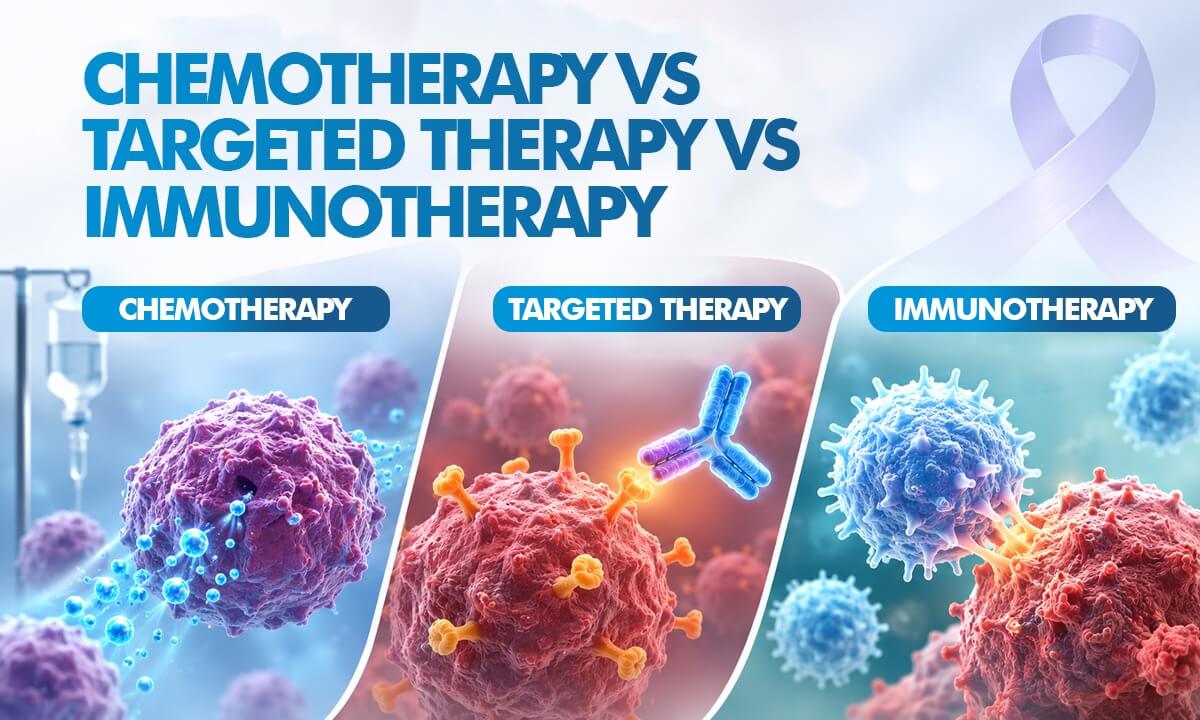
Chemotherapy vs Targeted Therapy vs Immunotherapy: How Cancer Treatment Is Selected
The treatment of cancer has been made more and more personalized in recent years. Although chemotherapy is still part of the treatment of cancer patients, there are also other forms of cancer treatments apart from chemotherapy, such as targeted therapy and immunotherapy. Cancer treatments are not only varied in how they act; these treatments are also varied in the suitability of using them on specific types of cancers and people.
Understanding what these treatments are and how they are different from each other will make the conversation with an oncologist less complicated for those who search for chemotherapy in Delhi. Usually, choosing among them is not an issue of picking up what one considers to be "better.” There are many aspects to take into account when making this decision.
What Is Chemotherapy?
Chemotherapy is an intravenous form of cancer treatment using drugs to kill cancer cells or prevent them from multiplying.
This is due to the fact that the drugs used in chemotherapy can move through the blood system; therefore, they will target cancerous cells anywhere in the body. Chemotherapy is effective in the treatment of cancers that have already spread or even some localized cancers.
Chemotherapy treatment might be suggested:
-
Prior to surgery to make the tumour smaller
-
After surgery to decrease the chance of reoccurrence
-
With radiation therapy
-
As the main method of cancer treatment
-
In the treatment of advanced or metastatic cancer
-
To ease symptoms of advanced cancer
Chemotherapy consists of one or several medications depending on the cancer type and the patient's case.
What Is Targeted Therapy for Cancer?
Targeted therapy for cancer refers to drugs that are formulated to affect certain molecules, proteins, or biological pathways that cause the growth and survival of cancers.
As opposed to chemotherapy that affects all rapidly dividing cells, targeted therapy drugs are developed to bind certain characteristics of cancer cells.
But targeted therapy may not be effective in all cancers. For the drug to work, there must be a certain biomarker or molecular characteristic in the tumour.
How Is Targeted Therapy Selected?
Molecular or biomarker tests may be recommended for the tumour. The presence of certain mutations or proteins can affect the cancer's sensitivity to specific drugs, depending on the type of cancer being treated.
It means that even two people who have cancer in the same organ may be given different drugs since the biological makeup of their tumours is different.
What Is Immunotherapy for Cancer?
The phrase immunotherapy for cancer refers to a method that assists the immune system of the body in identifying and targeting cancer cells.
In some instances, the cancer cells evade recognition by the body's immune system. Some forms of immunotherapy drugs may obstruct these processes and enable the immune cells to target the tumour.
Immunotherapy has been proven to be an effective treatment approach for various cancers, including lung cancer, kidney cancer, melanoma, bladder cancer, and some gastrointestinal and breast cancers.
It is not suitable for all patients. Various factors are taken into account before suggesting immunotherapy treatment for any individual.
Chemotherapy vs Targeted Therapy vs Immunotherapy
While all three of these are employed in the treatment of cancer, they work through completely different mechanisms and have different criteria for suitability.
Chemotherapy
The mechanism behind chemotherapies involves either damage to or killing of fast-dividing cells.
Important features:
-
Works against a variety of cancers
-
Can be administered prior to or following surgery
-
Can be combined with radiation or other medications
-
Can be employed in case of cancer spreading
-
Acts on healthy fast-dividing cells apart from cancer cells
Targeted Therapy
Targeted therapies affect molecules responsible for cancer development.
Important features:
-
Depends on the availability of a target or biomarker in many cases
-
Can be more selective than conventional chemotherapy
-
Can be employed alone or together with other therapies
-
Availability is determined by cancer type and molecular profile
Immunotherapy
Immunotherapy involves stimulation or re-stimulation of the body’s immune reaction to cancer.
Important features:
-
Employment of immune system against cancer
-
May offer sustained response in certain cancers
-
Can be used alone or in combination with chemotherapy, targeted therapy and others
-
Only certain patients can be treated using particular immunotherapies
It is crucial to note that "more modern" does not necessarily mean "better." The optimal treatment varies depending on the particular cancer.
How Do Doctors Choose the Right Cancer Treatment?
There are several things one needs to do when choosing chemotherapy, targeted therapy and immunotherapy.
Identifying the Type of Cancer
Firstly, one needs to find out where the cancer originated and what kind of cancer it is.
Thus, treatment of breast cancer can be very different from treatment of lung cancer, lymphoma, or stomach cancer.
Determining the Cancer Stage
Cancer staging helps to understand how far the disease progressed.
The stages of the cancer can be based on the following factors:
-
Size of the tumour
-
Presence of the nearby lymph-nodes involvement
-
Distant organs involvement
-
Or any other characteristic of the cancer
Thus, treatment of early-stage cancer will be very different from treatment of metastatic cancer.
Knowing tumour Biology
With modern oncology, there is a need to know the biology of the tumour.
Depending on the type of the cancer, the doctors may test the following aspects:
-
Hormone receptors
-
HER2
-
PD-L1
-
Mutations of some genes
-
And other molecular markers
The results will help to choose whether to use targeted therapy or immunotherapy.
Previous Treatment
What treatment the patient had before also matters a lot.
For example, for someone who already had chemotherapy, there will be different treatment options if the cancer returns or progresses.
Assessing Overall Health
Various factors such as age, general health, and functioning of other organs may affect whether the treatment is appropriate for a certain patient.
Moreover, doctors take into consideration tolerance of possible side effects by the patients.
When Is Chemotherapy Preferred?
Chemotherapy is an indispensable part of cancer treatment and can be used in numerous cases.
The use of chemotherapy is recommended in cases when:
-
The cancer has proved to be sensitive to chemotherapy
-
The tumour must be made smaller before surgery
-
The cancer needs to be treated after surgery
-
Cancer has metastasized in other organs
-
There are no appropriate targeted therapies
-
Chemotherapy should be combined with some other therapy
For some types of cancer, chemotherapy still remains the standard and very efficient method of treatment, although new treatment methods have been developed.
When Is Targeted Therapy Preferred?
Targeted therapy is used when a test shows that there is an appropriate target for the tumour.
For instance, some tumours might have particular mutations or proteins that can be addressed by targeted drugs.
A suitable target does not necessarily imply that targeted therapy will be successful. The doctor will look at other factors such as the stage of the disease and the general state of the individual's health.
When Is Immunotherapy Preferred?
It is possible to use immunotherapy as a strategy for managing certain cancers according to various conditions like tumour type, staging and biomarkers.
At times, the application of immunotherapy can take the form of a primary therapy. At other times, it will involve a combination of immunotherapy and chemotherapy among other modalities.
It is important that health care providers consider immune-related side effects since these arise due to an overactive immune system.
Can Chemotherapy, Targeted Therapy and Immunotherapy Be Combined?
Yes. Treatment for cancer may not always be based on choosing one of the above options only.
Combining the following treatment methods based on the type of cancer may be done:
- Chemotherapy and immunotherapy.
- Chemotherapy and targeted therapy.
- Targeted therapy with others.
- Immunotherapy and chemotherapy.
- Systemic therapy and surgery/radiation therapy.
What Are the Side Effects?
Every form of cancer therapy is accompanied by certain side effects, although these differ greatly in nature and intensity.
Chemotherapy Side Effects
Some of the potential side effects are:
-
Tiredness
-
Nausea and vomiting
-
Loss of hair
-
Lower numbers of blood cells
-
Increased risk of infection
-
Altered eating habits
-
Sore mouth
-
Nerve reactions in certain drugs
Not all chemotherapy drugs induce the same side effects.
Side Effects of Targeted Therapy
Depending on the drug used, the patient might suffer from:
-
Changes in skin and rash
-
Diarrhoea
-
Fatigue
-
High blood pressure
-
Liver changes
-
Side effects of other drugs
Side Effects of Immunotherapy
Immunotherapy can cause side effects for the body’s immune system, including organs like skin, bowel, liver, lungs, or endocrine glands.
During the immunotherapy process, the patient should inform the doctor about all unusual symptoms.
Is Chemotherapy Still Necessary Today in Cancer Treatment?
Certainly.
Innovation of targeted therapy and immunotherapy hasn’t rendered chemotherapy obsolete. Chemotherapy remains an important method of cancer treatment and is often used in combination with other new treatment methods.
Nowadays the main task of oncology is not to substitute one treatment for another just because it’s newer. The specialists make a decision on the basis of the data and the individual patient’s characteristics.
What Should You Consider When Looking for Oncology Services in Delhi?
Individuals looking for the best oncology hospital in Delhi need to take into account whether the facility can provide a comprehensive cancer diagnosis along with access to the needed treatment specialists.
The following aspects should be taken into account:
-
Treatment by medical oncologist
-
Radiation oncology
-
Surgical oncology
-
Pathology and molecular studies
-
Facilities for staging and imaging
-
Multidisciplinary approach in treatment planning
-
Provision of chemotherapy
-
Appropriate targeted therapy
-
Immunotherapy
-
Support and follow-up
The multidisciplinary approach can be especially helpful if there are a number of treatment options considered.
Why Choose Action Cancer Hospital for Cancer Treatment?
Action Cancer Hospital offers special services for cancer treatment including diagnosis, treatment, and follow-up. Patients can also seek the help of oncologists in knowing more about their diagnosis and discussing ways of treatment depending on their case.
For those who want to know more about chemotherapy in Delhi, the help of medical oncology, diagnostic workup, and cancer care could assist in making decisions concerning treatment in relation to the kind of cancer and other factors.
Frequently Asked Questions
1. Is Chemotherapy more preferable than targeted therapy or immunotherapy?
There isn't any one universal treatment that will work for everyone. Chemotherapy treatment, targeted therapy for cancer and immunotherapy for cancer are three different approaches and depend on the particular case of cancer and other related parameters.
2. What determines the proper cancer treatment?
In the process of choosing the proper treatment, the oncologists take into account cancer type and its stage, the biology of tumour cells, the results of biomarker testing, the type of treatment that was applied previously, general health status of the patient and other possible benefits and risks. All of these help the oncology team choose the best cancer treatment options.
3. When is Targeted therapy prescribed for cancer?
Targeted therapy for cancer is often chosen for those cancer cases when there is certain molecular property of the tumour which can be corrected by some targeted drug. In this case, there might be a test before choosing the therapy.
4. Is Immunotherapy suitable for every cancer patient?
No, not for all the cases. Immunotherapy for cancer is suitable only for particular cases depending on many parameters such as the cancer type and stage, biomarker results and overall health.
5. Where can I receive chemotherapy in Delhi?
For individuals searching for chemotherapy in Delhi, a cancer center equipped with skilled medical oncologists, diagnostic services, lab services, cancer medication, and facilities to handle side effects of treatment is highly recommended.
