


 Preventive Health

 Contact Us
 Career

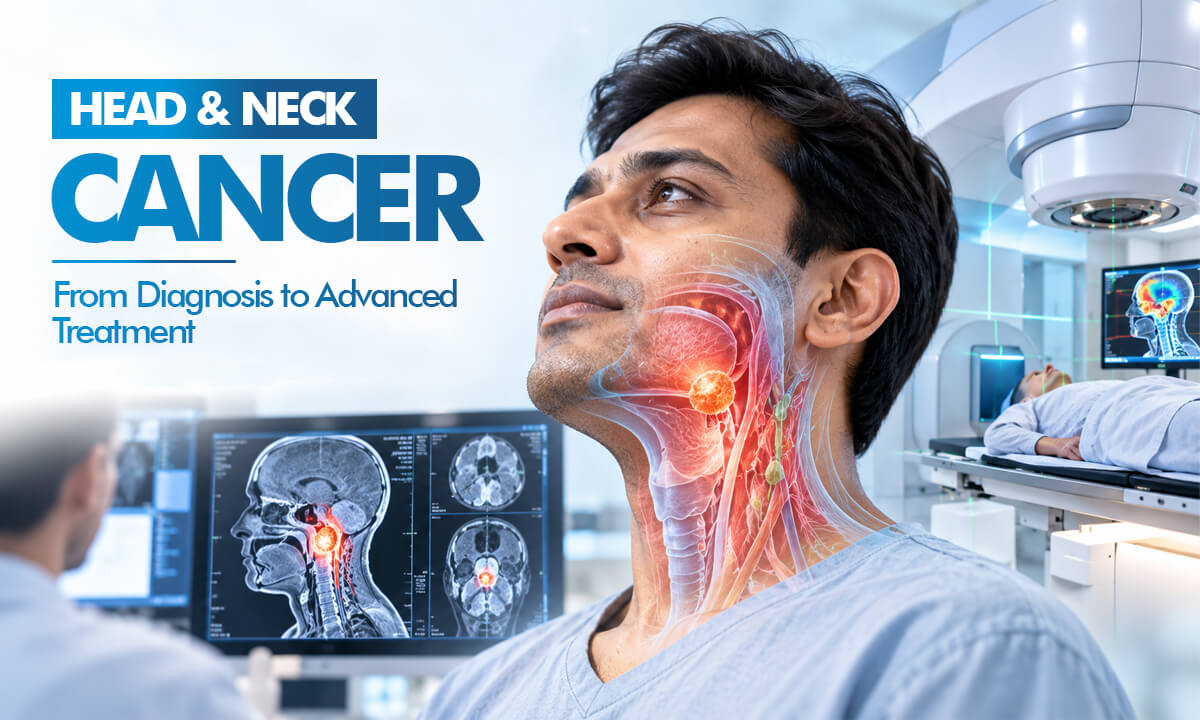
Head and Neck Cancer Treatment in India: Latest Surgical, Radiation and Targeted Therapy Options
Diagnosing head and neck cancer can be very difficult for the patient and the family members because it involves various kinds of cancers that develop in different areas of the body such as mouth, throat, vocal chords, nose, sinus, and other head and neck areas. Since such cancers could implicate important physiological activities like speech, respiration and eating, a thorough plan is required to deal with them.
While looking for information on head and neck cancer treatment in India, patients would be able to discuss the different treatments available and choose the one which suits them the most according to their medical condition. Not all patients need the same type of treatment because of various reasons related to their situation.
What is Head and Neck Cancer?
It is a kind of cancer that results from the tissues and organs of the head and neck region. Most cancers develop from the cells lining the wet linings of the mouth, throat and other parts of the body.
Cancers may be categorised depending on the location as follows:
- Mouth cavity cancer
- Oropharynx cancer
- Nasopharynx cancer
- Hypopharynx cancer
- Larynx cancer
- Nasal cavity and paranasal sinus cancer
- Salivary gland cancer
Some head and neck cancers are linked to smoking and alcohol consumption, while certain oropharynx cancer is significantly associated with HPV Infection.
What are the signs of Head and Neck Cancer?
The presence or absence of cancer in the body determines the manifestation. They may include:
- Persistent sore or ulcer in the mouth
- Lump in the neck area
- Persistent sore throat
- Difficulty or pain during swallowing
- Persistently hoarse voice
- Bleeding from the mouth or nose without apparent cause
- Persistent ear pain especially when accompanied by other symptoms
- Trouble opening the mouth
- Unexplained weight loss
- Change in how dentures fit
- Persistent lump or growth in the mouth
It should be understood that there are many other diseases that may exhibit the above mentioned symptoms and signs. However, it is crucial for them to undergo further investigations conducted by the doctor.
How Is Head and Neck Cancer Diagnosed?
It is crucial to diagnose correctly for choosing the right treatment for (head and neck cancer).
The examination includes:
Physical and Endoscopic Examination
The specialist might check the patient's mouth, throat, nose, and neck, among other body parts. The specialist will use an endoscope to view the body parts that cannot be easily examined through normal examination, based on their presumed location.
Imaging
In imaging studies like CT, MRI, or PET-CT scanning can be advised in order to determine the size and position of the tumour, as well as the metastasis of the disease.
Biopsy
In a biopsy procedure, a small sample of the abnormal tissue is removed and studied by a pathologist. This is often very important in making a diagnosis of cancer.
More tests, such as HPV-related tests that are needed in some cases of oropharynx cancers and molecular/biomarker tests, can provide useful information for treatment purposes.
Treatment Options for Head and Neck Cancers
The different treatment modalities for head and neck cancers can be surgical, radiation, or systemic therapies such as chemotherapy, targeted therapy, and immunotherapy.
The treatment could be done using one modality or in combination.
This will depend on the site, staging, resectability, general state of the patient, and effect of the treatment.
Head and Neck Cancer Surgery
Head and neck cancer surgery is indicated when the tumour is operable, and surgery is indicated as a suitable option to treat the condition.
The surgical technique used is dependent on the location of the cancer. It may entail surgical excision of the primary tumour, affected lymph nodes in the neck, or surrounding tissues in the case of advanced disease.
Minimally Invasive and Transoral Surgery
Surgical removal of tumours through natural body openings like the mouth could be considered in cases of selected tumours in accessible parts of the body using minimal invasive surgery techniques.
Transoral Robotic Surgery (TORS) could be used in cases of selected oropharyngeal tumors.
Appropriateness of minimal invasive surgery will depend on the tumour's site, size, extent, and others.
Neck Dissection
Cancers involving the head and neck region have the possibility of spreading to the lymph nodes located within the neck region. Where there is a suspicion of the involvement of lymph nodes or there is high likelihood of spread, the surgery might involve the removal of involved lymph nodes through a process referred to as neck dissection.
Reconstructive Surgery
Certain surgeries for head and neck cancer might have an impact on how one looks or functions like swallowing and talking. This is where reconstructive surgery becomes necessary after the cancer tumor is removed.
In a surgical reconstruction, tissue is transferred from other areas of an individual's body or through specific surgical procedures.
Is there a specific Radiotherapy Treatment for Head and Neck Cancer?
Yes. It is useful for:
- As a first choice treatment for some selected cancers
- Following surgery to prevent recurrence
- In combination with chemotherapy for some selected locally advanced cancers
- For palliation in advanced cases
Today’s radiation therapy is designed with precision in order to deliver radiation to the tumour and minimise the amount of radiation to the normal tissues surrounding the tumour.
Some of these technologies are IMRT and IGRT which are used in appropriate situations.
What Are the Side Effects of Radiation Therapy?
The side effects vary according to the region treated, the amount of radiation used, the duration of treatment, and the concurrent use of other treatments.
The possible side effects include:
- Fatigue
- Skin reactions
- Dry mouth
- Mouth and/or throat soreness
- Difficulty swallowing
- Taste alterations
- Oral health problems
- Loss of appetite
All patients do not experience the same side effects. The radiation oncology team will assist in the provision of nutritional advice, mouth care, and fluid intake.
What Is Targeted Therapy for Head and Neck Cancer?
Targeted therapy for head and neck cancer refers to medications that are intended to interact with particular molecular targets or pathways in cancer development.
An example of such treatment is treatment targeting epidermal growth factor receptor (EGFR), which is responsible for the development and survival of some cancer cells.
Targeted therapy can be prescribed to certain patients who have chosen type of head and neck cancer.
It differs from conventional chemotherapy due to the fact that targeted medications are intended to interact with particular features of cancer cells. On the other hand, there may be side effects.
Can Immunotherapy Be Administered to Patients with Head and Neck Cancer?
Yes. Immunotherapy has been found to be an effective mode of treatment for some patients with head and neck cancers that are recurrent or metastatic.
The treatment is based on the theory where the immune system attacks the cancer cells. This may be affected by many factors such as the stage of the disease, prior treatment and the tumour features.
Immunotherapy can be used alone or alongside other treatments.
How Does One Decide on Treatment in Head and Neck Cancer?
It is not possible to have one mode of treatment for all patients.
Physicians will take into account:
- Specific tumor location
- Cancer type and its stage
- Size of the tumour
- Involvement of lymph nodes
- Metastasis
- Human papillomavirus (HPV) in some cases
- General state of the patient
- Already received treatment
- Impact of the procedure on patient’s ability to speak, swallow and other vital functions
These are just some of the factors considered by a multidisciplinary team before prescribing treatment.
Why Is Multidisciplinary Care Important?
Cancer of the head and neck has multiple effects and thus may need various types of specialists.
Based on the condition of the patient, the following may be included in the treatment team:
- Head and neck surgeons
- Medical oncologists
- Radiation oncologists
- ENT specialists
- Radiologists
- Pathologists
- Dental specialists
- Speech therapists and swallowing therapists
- Nutritionists
Such a combined effort will assist doctors to maintain the right balance between cancer management and preservation of vital functions.
How Do You Choose a Head and Neck Cancer Specialist in Delhi?
When searching for a head and neck oncologist in Delhi, the patient must take into account the experience of the doctor in dealing with the specific form of cancer.
The following aspects should be considered:
- Experience in working with the specific head and neck cancer
- Surgical and oncological qualifications
- Availability of diagnostic imaging facilities
- Presence of radiation oncologists
- Access to systemic therapy
- Multidisciplinary approach to treatment
- Rehabilitation and reconstruction
- Post-treatment care
In case of the need for surgery, it is especially important to find an experienced head and neck cancer surgeon in Delhi.
What Questions Should You Ask Your Head and Neck Cancer Team?
For individuals diagnosed with cancer, discussing things related to health might be difficult. Such situations can be sorted out by making preparations for the discussion before the discussion takes place and having thorough knowledge of one’s treatment options.
Some of the questions that might be helpful are as follows:
- What type of head and neck cancer is it?
- Where is the tumour located exactly?
- What is the stage of the cancer?
- Are the cancer cells spread to the lymph nodes or any other part of the body?
- Do I need surgery?
- Do I need radiation therapy?
- Do I need to go for chemotherapy, targeted therapy, or immunotherapy?
- What kind of side effects should I expect?
What Should Patients Know About Head and Neck Cancer Treatment in India?
Treatment for head and neck cancers in India can be obtained from specialised cancer hospitals that employ combinations of surgery, radiation oncology and systemic cancer therapies.
When choosing the right hospital, the patient must check whether the cancer centre has the right expertise and infrastructure to treat his unique cancer problem.
Patients should not select a hospital only because it is marketed as the best in town; rather, the experience of the hospital in dealing with cancer should be assessed.
Why Choose Action Cancer Hospital for Head and Neck Cancer Care?
Action Cancer Hospital offers specialised services related to the management of various forms of cancer for individuals being examined and treated. The patients have the option of consulting relevant specialists regarding their cancer form and treatment options depending upon their specific situation.
Availability of oncologists in India for cancer management is the only requirement to receive treatment in India.
Frequently Asked Questions
1. Is head and neck cancer treated in India?
Yes, head and neck cancer is managed by surgery, radiotherapy, chemotherapy, targeted therapy, immunotherapy or a combination of any of the treatments depending on the site, type, stage of cancer, and patient’s overall condition.
2. What are the common treatment options for head and neck cancer?
Head and neck cancer treatment will involve surgery, radiation and/or systemic therapy which includes chemotherapy, targeted therapy and immunotherapy. While some patients have one kind of treatment, others have a combination of these.
3. Is surgery necessary for the treatment of head and neck cancer?
Not necessarily. Some cases of head and neck cancer can be treated solely through radiation and systemic therapy while others may need surgery.
4. What is head and neck cancer surgery?
Head and neck cancer surgery is a procedure which entails the removal of the tumour as well as any other effect on the lymph nodes or nearby tissues. It may depend on the type of cancer for it to use minimally invasive procedures, standard surgery, and even reconstruction procedures.
5. What is radiation therapy for head and neck cancer?
Radiation therapy for head and neck cancer is when the treatment makes use of radiation having an extremely high energy to destroy or control the cancer cells.
