


 Preventive Health
 Contact Us
 Career
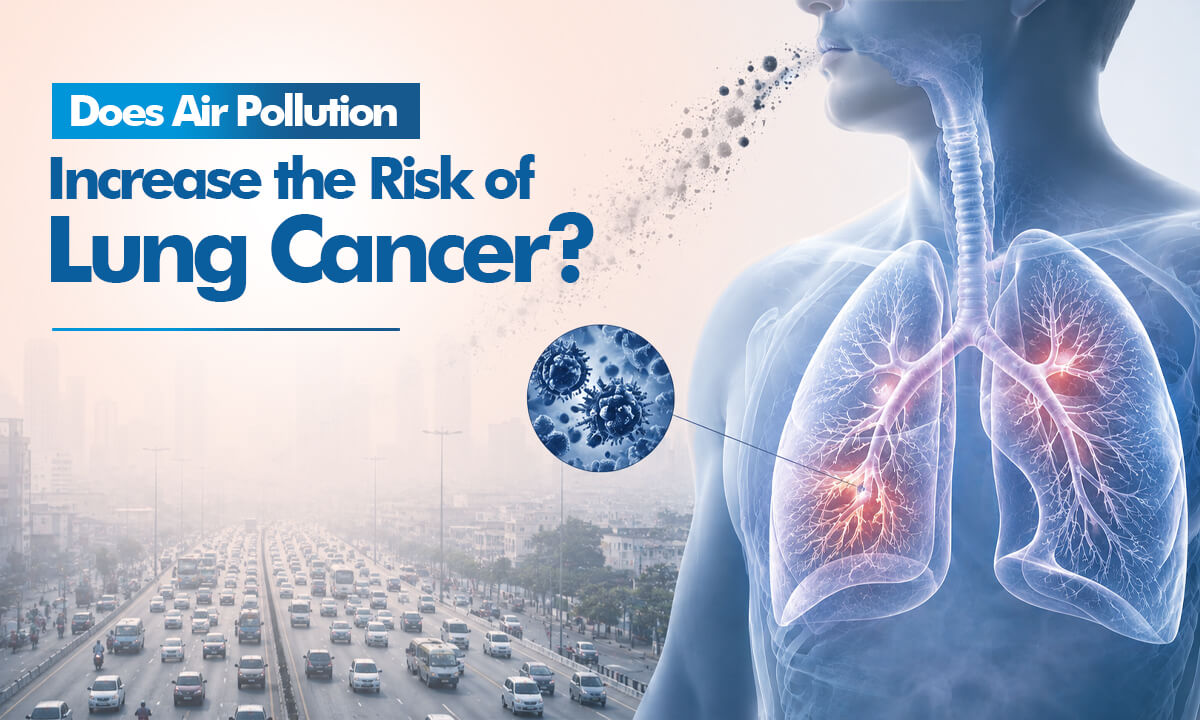
Does Air Pollution Increase the Risk of Lung Cancer?
Air pollution is today becoming one of the greatest threats to health. It does not matter how much pollution there is in the sky of the city and whatever source of pollution may be, millions of people get exposed to air pollution unaware of its implications on their health.
Although it is generally believed that effects of air pollution—including coughing, allergy, asthma, and breathing problems—are considered short-term effects of air pollution in the majority of cases. In recent years it has been proven that air pollution may result in dangerous illnesses.
Nowadays, it has become evident that besides the above mentioned symptoms, air pollution may cause different illnesses from cardiovascular diseases, stroke, chronic respiratory diseases to lung cancer caused by air pollution.
A lot of people wonder whether breathing polluted air may cause lung cancer. And the answer to this question is positive. Breathing polluted air filled with fine particulate matter (PM2.5) may contribute to the development of lung cancer even in non-smokers.
At Action Cancer Hospital, raising awareness about cancer prevention is as important as giving patients advanced treatment of cancer.
Understanding Air Pollution
Air pollution can be described as any substance that exists within the atmosphere and causes damage to both people and their surroundings. The source of such pollution may either be natural or manmade.
Some of the sources include:
1. Emissions from cars
2. Smoke from industries and factories
3. Dust from construction and demolition
4. Crop residue burning
5. Fumes from coal plants
6. Cooking fuel at homes
7. Wildfires
8. Diesel generators
9. Garbage burning
It is because of this same reason that makes it impossible for us to observe the pollutants even through our naked eyes.
Definition of PM2.5 & PM10
There are several different kinds of pollutants present in the environment. Among all these pollutants, one of the most harmful pollutants is the particulate matter.
These are basically of two types, known as:
PM10: This is a kind of particulate matter that can be inhaled into the lungs of the individual.
PM2.5: This is particulate matter which is 30 times smaller than the human hair.
Some of the properties of PM2.5 particles due to its small size are:
1. Penetrate deep into the lungs.
2. Enter the small alveoli.
3. Get into the blood circulation system.
4. Cause body-wide inflammation.
Various diseases have been linked to exposure to fine particles such as PM2.5, one of them includes lung cancer.
Is Lung Cancer Linked to Air Pollution?
Yes.
As per the WHO and IARC, air pollution and particles in the outdoor environment come under Group 1 carcinogens because of scientific evidence that proves these are the factors capable of causing cancer in humans.
Whenever one is exposed to polluted air for an extended period, the particles in the air will accumulate in one's lungs. Consequently, the possibility of such particles affecting the cells and resulting in cancer cannot be ruled out.
Air pollution is different from cigarette smoke because its effects can take their time.
Therefore, it becomes imperative to lower exposure levels.
What is the Role of Air Pollution in Damaging the Lungs?
Every breath that is taken consists of oxygen entering the lungs. However, not only do good particles enter the respiratory system, but also some bad ones due to the polluted atmosphere.
Pollutants can cause various effects, including:
1. Irritation of the respiratory system lining.
2. Chronic inflammation.
3. Formation of free radicals.
4. Lung tissue damage.
5. Alteration of the healthy DNA structure.
6. Weakening of the capability to repair damaged cells.
All of these factors may play a role in increasing the risk of developing cancerous cells which can lead to lung cancer.
Can Lung Cancer Be Caused by Anything Other Than Smoking?
This is one of the misconceptions regarding lung cancer that exist widely. Though smoking has been proven to be the chief cause of lung cancer, there are several other causes too.
Non-smokers develop lung cancer due to the following reasons:
1. Exposure to air pollution for a long period
2. Passive smoking
3. Exposure to radon gas
4. Occupational exposure to asbestos and chemicals
5. Genetic reasons
An increasing number of cases of lung cancer have been observed in non-smokers over the past few decades.
Who Is at Higher Risk?
Although we all breathe the same air, certain people have more exposure to the pollutants than others.
The high risk categories are:
1. traffic policemen
2. drivers
3. street hawkers
4. construction site workers
5. factory workers
6. industrial workers
7. outdoor workers
8. people residing in close proximity to roads/highways/industries
9. those who use biomass fuel in their households
Children, elderly people, and asthmatics have more risks due to pollution of air.
Air Pollution and Other Types of Cancer
Though lung cancer is most linked to air pollution, there have been studies conducted into a potential link between cancer and other diseases as well.
According to recent scientific research, it seems that long-term breathing of polluted air may cause an increase in the risk of developing the following cancers:
1. Bladder cancer
2. Breast cancer
3. Liver cancer
4. Blood cancers
Symptoms of Lung Cancer
One of the problems with lung cancer is that early symptoms are usually absent in the disease.
As the condition advances, some of the symptoms to look out for may include:
1. A long-lasting cough, exceeding three weeks
2. Coughing out blood
3. Chest pain
4. Breathing difficulties
5. Wheezing
6. Changes in one’s voice (hoarse voice)
7. Weight loss without reason
8. Decreased appetite
9. Frequent chest infections
10. General fatigue
These signs can also be related to some other diseases so they cannot be overlooked. It is very important to consult a doctor.
Is it Possible to Prevent Air Pollution Completely?
It is difficult to prevent air pollution completely, especially for people who stay in urban cities. However, one can save oneself from pollution with the help of certain precautions.
These precautions include:
1. Knowing the Air Quality Index before going outside.
2. Exercising in the open air, provided that there is no pollution.
3. Using an N95 mask, if there is pollution.
4. Staying inside with closed windows if there is smog.
5. Using air purifiers in case of indoor air pollution.
6. Spending minimum time in polluted traffic zones.
7. Having indoor plants that clean the indoor air.
8. Ventilation inside without indoor smoke.
Healthful Lifestyle Options That Can Help Maintain Healthy Lungs
While it may be impossible to avoid pollution in our environment, there are healthful lifestyles that we can opt for in order to maintain the health of our lungs.
These include:
1. No smoking and completely refraining from using any type of tobacco product.
2. Avoidance of second-hand smoke.
3. Eating lots of fruits and vegetables.
4. Exercising in environments where air quality is good.
5. Taking in plenty of water.
6. Properly treating any existing respiratory problems.
7. Ensuring you take your vaccinations as per schedule.
The Importance of Regular Health Checkups
Individuals living in a polluted environment should never overlook the importance of regular medical checks.
Medical checkups play a critical role in cases of:
1. Individuals who smoke or have ever smoked.
2. People with existing lung ailments.
3. Individuals working in a polluted environment.
4. Individuals with a family history of lung cancer.
5. People experiencing respiratory ailments.
Early detection of the disease is extremely important for effective treatment of the patient. It is also equally important for regular medical examinations for the detection of other respiratory diseases.
When Do You Need to Consult Your Doctor?
You should consult your doctor if you have the following conditions:
1. Persistent cough after three weeks
2. Hemoptysis
3. Pain in the chest
4. Difficulty breathing
5. Loss of appetite followed by weight loss
6. Lung infection recurring several times
7. Feeling extremely fatigued for no particular reason
Consulting early helps your doctor find out the real cause of the disease.
At Action Cancer Hospital, patients experiencing continuous respiratory problems are urged to visit a doctor immediately before the symptoms get worse. Early detection is one of the most critical steps towards successful treatment of lung cancer as well as many other forms of cancer.
Final Thoughts
In addition to being an environmental issue, pollution is also a very severe health hazard affecting millions of individuals on a daily basis. A great number of scientific researches have confirmed the fact that breathing polluted air, especially PM2.5 air, can lead to lung cancer, even among those who never smoked before.
Although avoiding pollution might be difficult, living a healthy life, avoiding unnecessary exposure to pollutants, keeping yourself updated regarding the air pollution levels, and going in for health check-ups can reduce your risk of contracting any disease to a great extent.
At Action Cancer Hospital, creating awareness about cancer prevention and risk reduction is an important aspect of our comprehensive treatment process. Knowing that the environment we are living in can cause cancer, and also the impact of pollution on the air and the early stages of cancer can result in people making sure their lungs aren't protected from anything.
If you suffer from any respiratory ailments and want to keep your lungs healthy, visiting a doctor in good time might be quite beneficial to you.
