


 Preventive Health

 Contact Us
 Career

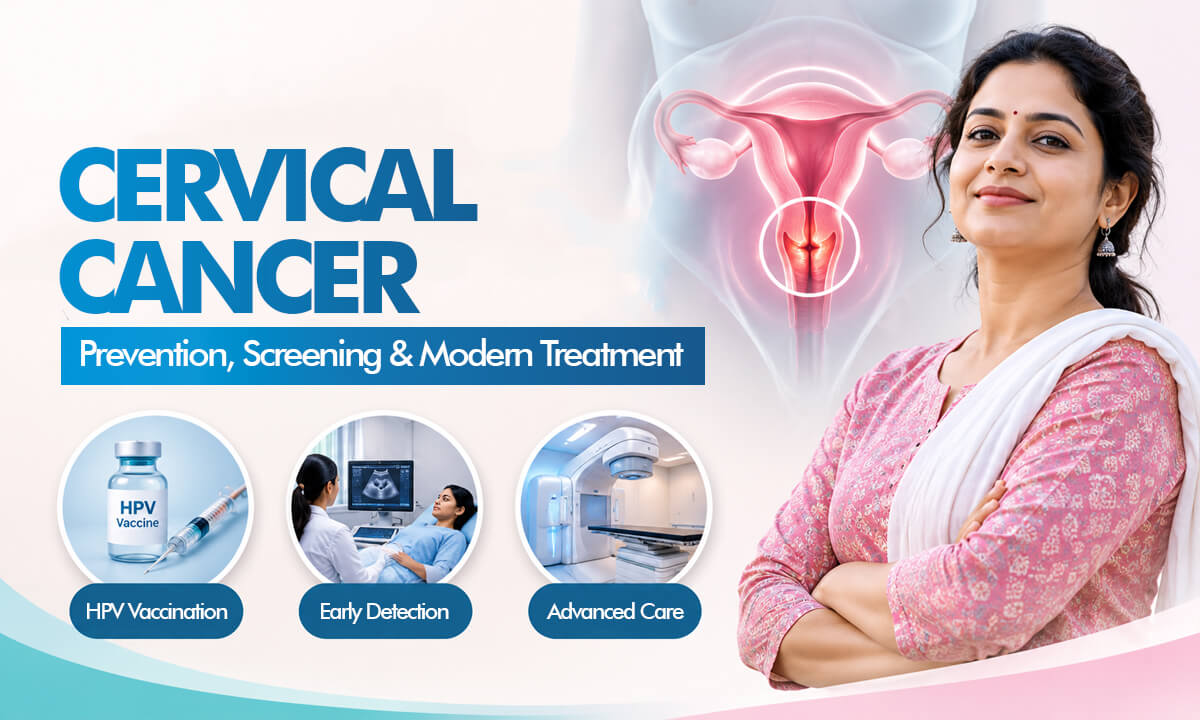
Cervical Cancer Prevention and Treatment: Screening, HPV Vaccination and Modern Care Options
Cervical cancer is among those cancers which are capable of being either prevented or detected in early stages by means of proper screening and preventive measures. Regular cervical screenings, symptom awareness and HPV vaccination can all contribute to the reduction of this disease burden.
When women search “treatment for cervical cancer in Delhi,” it is good to know not only the way this disease is treated, but also the way it could be prevented and detected in time. The treatment for cervical cancer in the modern world can be either surgery, radiation therapy, chemotherapy, targeted therapy and immunotherapy.
What Is Cervical Cancer?
The ailment of cervical cancer starts because of mutation of cells in the cervix. The cervix is the lower part of the uterus that links the vagina. Most cases of cervical cancer result from infections of certain types of HPV (high-risk).
Infection by such types of HPV is very common. But in most cases, such infections will heal on their own. The infections by high-risk HPV may cause cervical cells' change that might later become cancerous in nature.
This process takes a long time, and thus prevention and early detection are useful.
Can Cervical Cancer Be Prevented?
Certainly, the majority of cervical cancers can actually be prevented by way of vaccination, screening, and the proper management of any precancerous conditions.
Prevention of cervical cancer mainly involves reducing the likelihood of being infected with high-risk HPV as well as the early detection of abnormalities in the cervix before they become cancerous.
It is important to have the following preventative methods:
- HPV vaccination
- Proper cervical screening
- Follow-up after positive cervical screening
- No smoking
- Safer sexual practices
- Consultation upon the manifestation of symptoms
Preventive approaches would be more effective in conjunction with proper medical intervention.
How are HPV Vaccination and Cervical Cancer Related?
The link between HPV vaccination and cervical cancer is one of the main problems in the current prevention of cervical cancer.
Vaccination is aimed at protection of individuals from the types of HPV which may cause the development of cervical cancer. The maximum effect of vaccination is achieved in case people are vaccinated before the HPV infection occurs. For this reason, vaccination is typically recommended for adolescents.
However, vaccination cannot protect against all the types of HPV which may cause cervical cancer. Therefore, even vaccinated individuals may need to undergo the procedure of cervical cancer screening.
Those individuals who intend to vaccinate their children against HPV are recommended to consult with healthcare professionals.
What Is Cervical Cancer Screening?
Cervical cancer screening is conducted to detect any infection of HPV or abnormal cervical cells even before the development of cervical cancer or during the early stages of cervical cancer.
Based on the age of the patient and her risk factors, screening can include one or more of the following:
- HPV testing
- Cervical cytology test, also called Pap test
- Co-testing for both HPV and cytology in certain scenarios
Screening needs may differ depending on the individual's age, recent results, recent infections and any risks.
A healthcare worker will discuss the most suitable type of screening for you.
Why is Regular Cervical Screening Important?
Early detection of these changes via screening allows for the appropriate management of the changes.
One must not mistakenly believe that once vaccinated against HPV, the need for screening is eliminated. Screening & HPV Vaccine complement each other.
What are the Symptoms of Cervical Cancer?
There are no symptoms associated with cervical cancer in the early stages. As the disease advances, some of the potential cervical cancer symptoms that could present themselves include:
- Unusual vaginal bleeding
- Post-coital vaginal bleeding
- Inter-menstrual bleeding
- Unusual vaginal discharge
- Pelvic pain
- Painful coitus
- Advanced cases can present lower back and leg pain
- Advanced disease can present symptoms of urinary or bowel dysfunction
Symptoms of these diseases might also be caused by conditions other than cervical cancer. But in case of any odd symptoms, medical consultation is advised.
When to Visit Your Physician?
In case of any unusual vaginal bleeding, including post-coital and inter-menstrual bleeding, you need to see your physician.
Any persistent change in vaginal secretions or pelvic pain or any other symptoms should also be assessed by a healthcare provider.
Screening is done for a person who has not got any visible symptoms. If the symptoms are there then tests may be done rather than screening.
How Is Cervical Cancer Diagnosed?
Screening alone may not be helpful when there is some suspicion caused by symptoms, and other tests are suggested if tests don’t return any positive outcome.
Pelvic Examination
The healthcare provider can check for any abnormal appearance of the cervix and other reproductive structures.
Colposcopy
This procedure makes use of a special magnification device to examine the cervix. It may be conducted after an abnormal test result during screening.
Biopsy
In this test, a sample of cervical tissue is obtained and checked under the microscope to confirm the presence of cancer cells.
Staging and Imaging
If a diagnosis of cervical cancer is made, further investigations using imaging will help determine how far the disease has spread. In certain cases, investigations may consist of MRI, CT or PET-CT.
Correct staging is critical since it affects the choice of cervical cancer treatments.
What Are the Main Cervical Cancer Treatment Options?
Cervical cancer treatment is based mostly on the stage of cancer, features of tumour, state of general health and desire of the patient to remain fertile.
Methods of treatment can include surgery, radiation therapy, chemotherapy, targeted therapy, immunotherapy.
Surgery
In selected early-stage cervical cancers, surgery is possible.
In accordance with the stage of cancer and particular case, the procedure can vary from removal of tumour and adjacent tissues to more complex procedures involving the uterus and adjacent structures.
In some carefully selected cases of early cervical cancer, surgical procedure that preserves fertility of women is considered.
Radiation Therapy
High energy beams destroy cancerous cells. It is a good treatment method in locally advanced cervical cancer and may be applied in some selected cases of early cervical cancer as well.
Treatment methods can include external beam radiotherapy, brachytherapy or both types of radiation therapy.
Chemotherapy
Medications destroy or suppress growth of cancer cells. In some locally advanced cervical cancers, chemotherapy is prescribed with radiation therapy to enhance treatment effect.
Chemotherapy is possible in recurrent and metastatic cervical cancers.
Targeted Therapy
Targeted therapy works by acting on particular biological pathways implicated in cancer cell proliferation.
Certain patients with advanced or recurrent cases of cervical cancer might be suitable for targeted therapy based on their diagnosis and previous treatments.
Immunotherapy
Immunotherapy is a treatment that involves drugs which facilitate recognition of cancer cells by the body's immune system in order to destroy them. It is applicable to certain patients with advanced, recurrent or metastatic cervical cancer.
How Does Treatment Differ by Stage?
Cervical cancer staging is one of the major factors which influence the treatment strategy of patients suffering from cervical cancer.
Early Stage Cervical Cancer
Surgery may be the primary treatment option for early-stage cervical cancer. In some cases, fertility-sparing treatment may be considered for patients.
Other types of treatment can be necessary based on postoperative assessment results.
Locally Advanced Cervical Cancer
Locally advanced cervical cancer is usually managed through combined use of radiation and chemotherapy.
In particular, brachytherapy may be an important element of radiation treatment directed to the cervix and the surrounding tissues.
Advanced or Recurrent Cervical Cancer
If cervical cancer has metastasized to other organs or has been recurrent following treatment, the goal of treatment is likely to be controlling the disease and alleviating the patient's condition.
The management of cervical cancer includes chemotherapy, targeted treatment, immunotherapy, radiation and other treatment options.
How Do You Choose a Cervical Cancer Hospital in Delhi?
Those who are searching for a hospital for cervical cancer in Delhi may wish to look at the entire pathway of cancer care rather than only one method of treatment.
The following are some of the essential considerations:
- Gynecological oncologists
- Availability of cancer screening and diagnosis
- Pathology and imaging
- Surgical capabilities
- Radiation oncology, if necessary brachytherapy
- Medical oncology
- Availability of modern systemic therapies
- Treatment planning
- Fertility and support counselling if applicable
- Follow up and survivorship
Such a hospital can make cancer care specialists and disciplines co-ordinate.
Why is Multidisciplinary Care Needed?
Many different specialties are necessary because the disease, cervical cancer, needs extensive care.
The multi-disciplinary team may comprise of:
- Gynecological oncologists
- Medical oncologists
- Radiation oncologists
- Radiologists
- Pathologists
- Expert nurses
- Dieticians and supportive-care specialists
Collaborating helps different experts take a different look at the patient’s diagnosis and formulate a treatment plan for her.
What Should You Say and Ask Your Doctor?
In case you, or a patient who is dear to you is diagnosed with this disease, here are questions for the patient to asks:
- What stage is my cancer at?
- Is my cancer associated with HPV?
- Which treatment would you suggest and why?
- Can I have surgery as a treatment option?
- Am I going to need radiation or chemotherapy treatment?
- Can I keep my fertility?
- Can I get to do selective or immune therapy?
- What are the side effects that will I experience during treatment?
- What is the length of my treatment?
- What will be the follow up for?
Note taking and having family members during consultation sessions can be beneficial in this regard.
Why Choose Action Cancer Hospital for Cervical Cancer Care?
Action Cancer Hospital offers specialized services for the evaluation and treatment of cancers. The patients can see the concerned specialists to know about their diagnosis and treatment procedures depending upon the nature and stage of their cancer.
In case of patients looking for treatment for cervical cancer in Delhi, they can benefit from specialized services for diagnosis and treatment of their condition.
Frequently Asked Questions
1. Which are some of the treatment options for cervical cancer?
Treatment options for cervical cancer include surgery, radiotherapy, chemotherapy, target therapy, and immunotherapy. The choice of these will depend on the stage of cancer and its attributes.
2. How do I select a cervical cancer hospital in Delhi?
While choosing a cervical cancer hospital in Delhi, the following factors should be considered:
- Experience of the gynaecologic oncology team
- Diagnostic services
- Surgical services
- Radiation oncology services
- Systemic cancer treatment
3. Is there an indication for performing surgery in case of cervical cancer?
No, there is an indication for performing surgery in case of early stages, but in locally advanced cervical cancer, radiotherapy and chemotherapy might be indicated. It all depends on the diagnosis made.
4. Is there a possibility of treating cervical cancer in such a way that does not affect fertility?
Yes, there are cases where it is possible to treat cervical cancer without jeopardizing the fertility of the patient, but in certain cases only. Patients concerned about their fertility should discuss it with the specialists.
5. Is HPV vaccination useful after exposure to HPV?
There are cases when HPV vaccination could be useful, although it is mostly a preventive measure and not a treatment.
