


 Preventive Health

 Contact Us
 Career

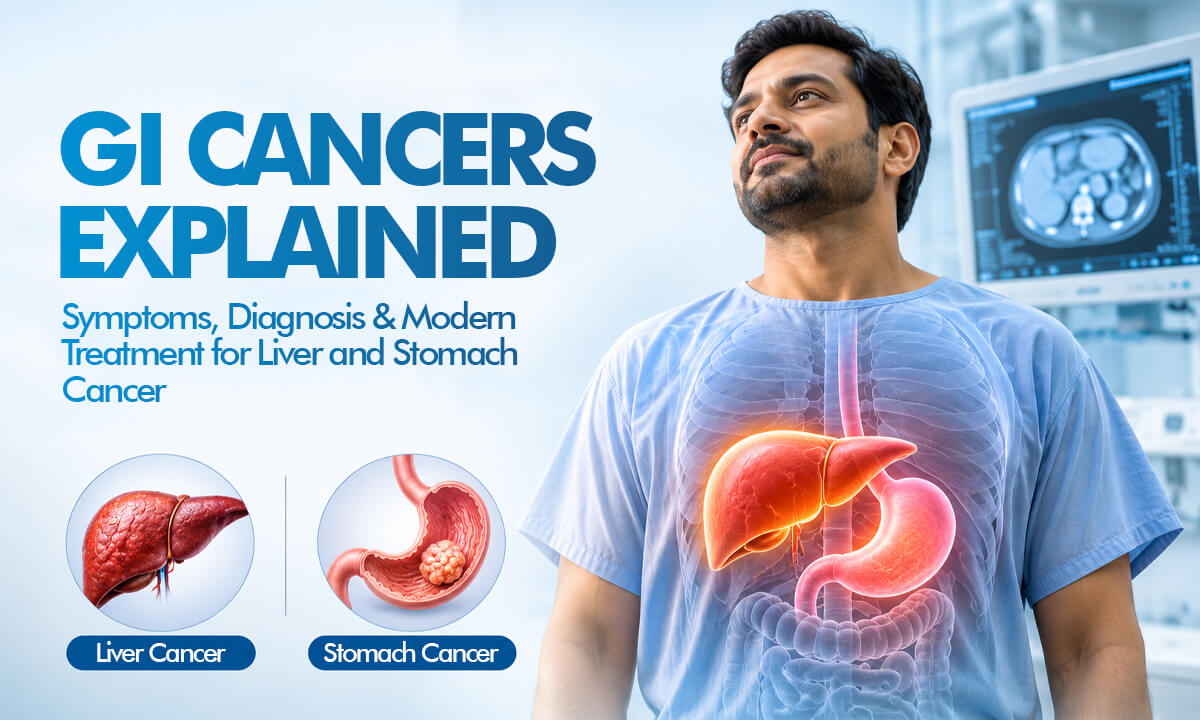
GI Cancers Explained: Symptoms, Diagnosis and Modern Treatment for Liver and Stomach Cancer
Gastrointestinal (GI) cancer is a broad term for the various types of cancers which arise in the digestive system and associated organs. These types of cancers may occur in the oesophagus, stomach, liver, gall bladder, pancreas, small intestine, colon and rectum amongst others. Since these types of cancers may vary widely in terms of their cause, symptoms and course of development, the treatment must also vary according to each particular case.
When it comes to GI oncology Delhi research, it is important for both the patient and his or her family to know the symptoms, the diagnostic procedures as well as the treatment methods available. This guide aims at addressing liver and stomach cancers in particular.
What Is GI Oncology?
GI oncology is an advanced specialization of cancer management that involves the identification and treatment of cancers of the GI tract and associated organs.
Some of the cancers managed by a GI oncologist include:
- Oesophageal cancer
- Gastric cancer
- Liver cancer
- Gallbladder and bile duct cancers
- Pancreatic cancer
- Cancers of the small intestine
- Colon cancer
- Rectal cancer
This will depend on the type of diagnosis made.
What Are Gastrointestinal Cancers?
GI cancers start developing when abnormal cells of the gastrointestinal system organs or the related organs start multiplying uncontrollably.
GI cancer may occur in the digestive organs themselves, as well as in organs that help the digestive process, such as the liver and pancreas.
The treatment is determined by such factors as:
- the location of cancer (which organ)
- the type of cancer
- the stage of the illness
- presence of lymph node metastases
- presence of distant metastases
- molecular and genetic features of the disease
- general state of health of the patient
That is why the term GI cancer treatment should not be treated identically for all patients.
What Are the Common Symptoms of GI Cancers?
Signs and symptoms will differ based on the organ affected. Some possible signs that could suggest cancer might include:
- Unexpected weight loss
- Abdominal pain
- Loss of appetite
- Difficulty swallowing
- Indigestion
- Nausea and vomiting
- Altered bowel habits
- Blood in stool
- Anemia
- Yellowing of skin and eyes
- Fatigue
The above signs do not have to mean cancer, as they may arise from many other non-cancerous illnesses. Nonetheless, one should seek medical evaluation in case of unexplained symptoms.
Understanding Liver Cancer
Cancer of the liver occurs in the liver. The common type of cancer in adults is hepatocellular carcinoma (HCC), but there are other types of cancer of the liver.
It is not the same with cancers that have reached the liver from other parts of the body; in such a case, treatment of the disease is based on where it originated.
What Are the Risk Factors for Liver Cancer?
Some of the possible causes that can increase one’s risk of developing liver cancer include:
- Chronic hepatitis B or hepatitis C infection
- Cirrhosis
- Heavy drinking over long periods of time
- Inherited liver diseases
- Non-alcoholic fatty liver disease and liver damage
- Contact with some substances like aflatoxins
However, not all people with these risk factors develop liver cancer. Those with chronic liver disease could have appropriate medical surveillance.
What Are the Symptoms of Liver Cancer?
Primary liver cancer might not necessarily present any symptoms at an early stage. As the illness worsens, the following are among the possible symptoms that might develop:
- Unexpected weight loss
- Lack of appetite
- Abdominal pain
- Feeling bloated after eating a little bit
- Abdominal mass
- Jaundice leading to yellowing of the skin or eyes
- Pale stools and dark urine
- Fatigue
- Nausea
Due to the similarities in symptoms for different liver diseases, it is advisable to seek professional diagnosis.
How Is Liver Cancer Diagnosed?
Diagnostics may include various tests based on the symptoms presented by the patient.
Doctors can use:
Imaging
Ultrasound, CT, or MRI is useful in finding out any abnormalities in the liver, as well as the severity of the disease.
Blood Tests
The blood test will determine the function of the liver, as well as, under certain conditions, the level of tumour markers like alpha-fetoprotein (AFP).
Biopsy
In certain cases, a biopsy is needed to confirm the diagnosis, although the imaging process is sufficient enough to diagnose certain liver diseases under a clinical setting.
What Is Liver Cancer Treatment?
Liver cancer treatments in Delhi rely on the extent of the disease, the functioning of the liver, the nature of the tumour, and any metastasis of the disease.
Treatment options could be:
Surgery
Surgery involving surgical resection of the tumour can be used for selected individuals who have cancer that can be resected without affecting the other parts of the liver.
Liver Transplantation
Liver transplantation may be an alternative treatment for carefully selected individuals who have certain types of liver cancers and diseases of the liver.
Ablation
Ablation is a procedure that involves destruction of the cancer cells by methods that do not involve complete surgical removal of the tumour. Radiofrequency ablation and microwave ablation may be considered in the case of selected small liver tumours.
Embolisation
There are some liver cancers that can be treated by embolisation where there is interruption of the blood supply to the tumour or administration of the treatment straight to the cancer cell through its blood supply. TACE and TARE are among the examples.
Targeted Therapy and Immunotherapy
Advanced cases of liver cancer can be treated using targeted medicine and immunotherapy for selected patients.
How Do You Choose a Liver Cancer Hospital in Delhi?
The patients who are searching for a liver cancer hospital in Delhi should see if the institution is providing complete diagnostic and treatment services and not only one method.
The key points to be considered are:
- Experienced oncologists in liver and GI cancers
- Advanced imaging services
- Pathology
- Hepato-biliary surgery
- Interventional radiology
- Medical oncology
- Radiation oncology
- Targeted therapy and immunotherapy
- Multidisciplinary treatment plan
- Follow up
It becomes especially important in case of the multidisciplinary approach to liver cancer treatment.
Understanding Stomach Cancer
A stomach cancer is called gastric cancer, arising from tissue lines in the stomach. It can occur in multiple types and are categorized into adenocarcinoma, which is a common type of stomach cancer.
An early stage stomach cancer may often present with no symptoms.
What Are the Common Stomach Cancer Symptoms?
Symptoms of stomach cancer may be:
- Continuous indigestion
- Aching in the abdomen
- Faster feeling of fullness while eating
- Poor appetite
- Vomiting or nausea
- Trouble in swallowing food in some cases
- Unexpected weight loss
- Tiredness due to anaemia
- Presence of blood in vomit or feces
- Continuous bloating
The above symptoms can be associated with other digestive problems as well, but it doesn't necessarily mean that one has stomach cancer.
How Is Stomach Cancer Diagnosed?
There are three ways in which stomach cancer can be diagnosed. They are:
Upper Gastrointestinal Endoscopy
The upper GI endoscopy helps a physician view the mucous lining of the oesophagus, stomach, and upper part of the small intestine by using an instrument with a camera. In the event that there is any unusual area, the physician may biopsy the tissues for examination.
Biopsy
The biopsy is tested in the lab to see if there are any cancer cells, and to see the kind of cancer. Further biomarker tests may be required in some cases of stomach cancer in order to determine treatment.
Imaging and Staging
CT scans, PET-CT scan, MRI and others may be carried out based on the clinical situation. The staging is important for treatment purposes.
What Is Stomach Cancer Treatment?
Stomach cancer treatment is determined by the stage, position, and features of the tumour.
It can consist of:
Surgery
The surgical intervention is performed to eliminate the tumour and adjacent lymph nodes when the cancer is local and removable without risks. It depends on the location of the tumour and its extent.
Chemotherapy
The treatment by using the chemotherapy drugs may be applied before the surgery to make the tumour smaller, or after it to decrease the risk of recurrence of stomach cancer or as a part of the treatment of the advanced disease.
Radiation therapy
The radiation therapy may be used for some selected types of stomach cancers along with the chemotherapy or independently, based on the individual patient's condition and the treatment program.
Targeted Therapy
Some types of stomach cancer have some molecular features which can be targeted with specific drugs. The examination of the tumour will help to identify if it is needed.
Immunotherapy
Immunotherapy may be taken into account in case of some patients with advanced stomach cancer.
What Is Gastrointestinal Cancer Treatment?
Gastrointestinal cancer treatment does not mean one type of treatment. The term describes the various forms of treatment of cancers in the digestive tract of a person.
These treatments may include:
- Surgery
- Chemotherapy
- Radiation therapy
- Targeted therapy
- Immunotherapy
- Interventional procedures
- Supportive/palliative treatment
All of this will depend on the type of cancer.
Why Is a GI Oncology Team Important?
These types of cancers are difficult and can need multiple experts.
Some examples of a multidisciplinary GI oncology team could be:
- GI Oncologists
- GI Surgeons
- Medical Oncologists
- Radiation Oncologists
- Gastroenterologists
- Hepato-biliary Surgeons
- Interventional Radiologists
- Pathologists
- Radiologists
- Specialists in nutrition and supportive care
With this strategy, the experts can consult on the diagnosis and plan the treatment.
What Does a GI Oncologist Do?
The GI oncologist of Delhi has an expertise in the medical treatment of gastrointestinal cancers and can be responsible for various dimensions of the cancer treatment of a patient.
According to the diagnosis, the oncologist may suggest the patient with chemotherapy, immunotherapy, or other treatments and work along with surgeons and radiation oncologists.
This can help in the appropriate consideration of various treatment options in case of complicated GI cancers.
Why Choose Action Cancer Hospital for GI Cancer Care?
Action Cancer Hospital offers specialized services in the management of cancer for patients who need to be evaluated or treated for cancer. Patients are able to see the relevant oncologists to learn more about their condition and treatment plans depending on the type and stage of cancer.
In relation to patients looking for GI oncology Delhi, specialized care can help make informed decisions regarding treatment.
Frequently Asked Questions
1. What is GI oncology?
GI oncology Delhi means specialized oncological services dealing with gastrointestinal cancer and related cancers such as stomach, liver, pancreas, colon, rectum and other digestive organs.
2. What is GI cancer treatment?
GI cancer treatment includes surgery, chemotherapy, radiation therapy, targeted therapy, immunotherapy and interventional oncology. Depending on the type and stage of the tumor, different treatment options are employed.
3. What is gastrointestinal cancer treatment?
Gastrointestinal cancer treatment means the diagnostic and treatment process for cancers involving digestive organs and related parts. Depending on the patient's diagnosis, one or many cancer treatments might be needed.
4. What are stomach cancer symptoms?
The symptoms of stomach cancer include prolonged indigestion, pain in abdomen, feeling of fullness soon after eating, loss of appetite, unexplained weight loss, vomiting and, in some cases, bleeding.
5. How to diagnose stomach cancer?
Upper GI endoscopy and biopsy is usually carried out when there is a suspicion of stomach cancer. Imaging studies are performed afterwards for staging purposes.
